Leave Your Message

Top 10 Benefits of Milk Protein Powder for Health and Fitness?

Milk Protein Powder has gained significant attention in the health and fitness industry. Recent studies indicate that protein intake plays a crucial role in muscle recovery and growth. According to a report by the International Society of Sports Nutrition, protein supplementation can enhance performance in both endurance and strength training. The report highlights how Milk Protein Powder is a high-quality protein source, essential for athletes.

Research also suggests that incorporating Milk Protein Powder into daily diets aids in weight management. A study in the Journal of Nutrition found that individuals consuming dairy protein experienced greater fat loss compared to those with plant-based protein. This is vital for those aiming to reduce body fat while building muscle.

However, it is essential to consider individual dietary needs. Not everyone may respond positively to Milk Protein Powder. Some individuals may experience digestive discomfort. It is worthwhile to reflect on personal tolerance and nutritional goals before adding this supplement to one's regimen.
Top 10 Benefits of Milk Protein Powder for Health and Fitness?

The Role of Milk Protein Powder in Muscle Growth and Recovery

Milk protein powder serves as a powerful tool for muscle growth and recovery. It contains casein and whey, both rich in essential amino acids. These amino acids play a vital role in muscle synthesis. Consuming milk protein after workouts supports the repair of muscle fibers. This can enhance overall recovery time, allowing athletes to train harder and more frequently.

Incorporating milk protein powder into your diet can also help manage muscle soreness. Many athletes report feeling less fatigued post-workout. However, it’s crucial to avoid over-reliance on supplements. Whole foods should always be a priority for balanced nutrition. Taste and texture can vary, prompting some people to experiment with different types. Finding the right mix might take time and effort.

Additionally, some individuals may experience digestive discomfort with milk protein. This could discourage consistent use, leading to missed opportunities for muscle recovery. It's essential to listen to your body's signals. Tracking your response to milk protein can help in making informed dietary choices. Discovering the right balance can support your fitness goals effectively.

Key Nutritional Components of Milk Protein Powder: Amino Acids and More

Milk protein powder is a valuable supplement, rich in essential amino acids. These amino acids play a critical role in muscle repair and growth. They also support overall health by boosting the immune system. Each serving can provide a significant amount of protein, helping to meet daily requirements.

When considering milk protein powder, pay attention to the source. Not all powders are created equal. Look for options that retain natural nutrients. This ensures you get a well-rounded profile of amino acids. Some blends may lack balance, which may not support optimal health.

Tip: Incorporate milk protein powder into smoothies for an easy protein boost. It can also be added to oatmeal or yogurt. Just a scoop can enhance the nutritional value of many meals.

However, not everyone tolerates milk protein well. Some individuals may experience digestive discomfort. It's essential to listen to your body and adjust intake as needed. Tracking your response can help you optimize usage. Focus on what feels best for you, as individual needs can vary widely.

Effects of Milk Protein Powder on Weight Management and Satiety

Milk protein powder is gaining attention for its role in weight management and satiety. This supplement is rich in essential amino acids. These nutrients are vital for muscle repair and growth. Incorporating milk protein powder into your diet may help you feel fuller for longer. Studies suggest that increased satiety can reduce overall calorie intake. When you consume fewer calories, weight management becomes easier.

Tips for using milk protein powder: add it to oatmeal or smoothies for a nutritional boost. Combine it with fruits or vegetables for a delicious snack. However, be mindful of portion sizes. Too much protein can lead to digestive issues. Listen to your body; balance is key.

Consistency in your diet also matters. Consuming milk protein powder regularly can maintain your energy levels. But remember, it’s not a miracle solution. It works best alongside a healthy diet and exercise. Reflect on your choices and progress frequently. A sustainable approach yields better results over time.

Top 10 Benefits of Milk Protein Powder for Health and Fitness

Benefit Description Impact on Weight Management
High-Quality Protein Source Provides essential amino acids crucial for muscle growth and repair. Supports muscle retention during weight loss.
Enhances Satiety Increases feelings of fullness, reducing overall calorie intake. Aids in appetite control, assisting in weight loss efforts.
Supports Lean Muscle Development Promotes lean muscle gain when combined with resistance training. Increases metabolic rate, aiding in weight management.
Convenient Nutrition Offers a quick and easy way to boost protein intake. Helps maintain a caloric deficit while ensuring adequate protein.
Supports Recovery Aids muscle recovery post-exercise, reducing soreness. Facilitates consistent training, contributing to weight loss progress.
Improves Bone Health Rich in calcium and other minerals essential for bone density. Ensures physical activity is safe and effective.
Boosts Metabolism Protein has a higher thermic effect, increasing calorie burn. Helps create a caloric deficit, essential for weight loss.
Versatile Ingredient Can be added to various recipes, enhancing nutritional value. Encourages healthy eating habits.
Enhances Immune Function Contains immunoglobulins and lactoferrin that support immunity. Promotes overall health, aiding weight management.
Promotes Healthy Skin Rich in nutrients that support skin health and hydration. Encourages engagement in fitness and health activities.

Milk Protein Powder: Aiding Bone Health and Mineral Absorption

Top 10 Benefits of Milk Protein Powder for Health and Fitness?

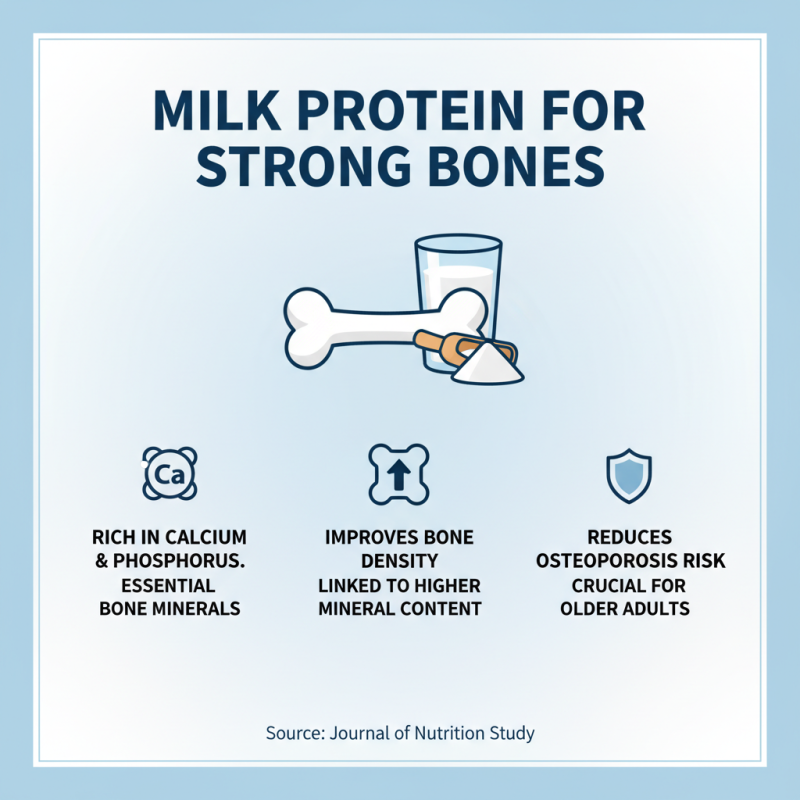
Milk protein powder is gaining attention for its role in enhancing bone health. Research indicates that milk protein is rich in calcium and phosphorus, both essential minerals for bone development. A study published in the Journal of Nutrition suggests that adequate protein intake significantly correlates with improved bone density. Diets high in milk proteins can help reduce the risk of osteoporosis, especially in older adults.

Mineral absorption is another vital benefit of milk protein powder. It has been found that milk proteins facilitate the absorption of key minerals. According to a report by the International Dairy Federation, the combination of proteins and minerals in milk products leads to better bioavailability. This means your body can utilize the minerals more effectively. However, some individuals may still face challenges in digestion. Lactose intolerance can hinder the benefits for a portion of the population, presenting a need for lactose-free alternatives.

Incorporating milk protein powder into daily nutrition can prove beneficial. It can be added to smoothies, oatmeal, or soups. This simplicity makes it a versatile option for improving diet quality. Yet, not everyone may experience the same positive effects. Personal dietary needs vary greatly, highlighting the importance of tailored nutrition plans.

Comparative Analysis of Milk Protein Powder and Other Protein Sources

Milk protein powder offers unique advantages compared to other protein sources. It combines both casein and whey protein. This duo provides a sustained release of amino acids. As a result, it supports muscle growth and recovery effectively. Many athletes prefer it after workouts. The creamy texture enhances shakes and smoothies too.

In contrast, plant-based proteins like soy or pea often lack certain essential amino acids. They may not provide the same muscle-building effects. However, they're typically easier to digest for some people. Milk protein is rich in calcium, which strengthens bones. This nutrient is often missing in vegan protein sources.

Taste and mixing ability also matter. Milk protein powder usually mixes well and tastes smooth. Some alternatives can be gritty and hard to blend. This can be frustrating when you're in a hurry. Convincing oneself to choose one protein source over another can be confusing. Each has its pros and cons. It's essential to assess personal health goals and dietary restrictions. Finding balance in protein sources may require trial and error.

Top 10 Benefits of Milk Protein Powder for Health and Fitness