China Top Textured Soy Protein Manufacturers and Suppliers
China has become an important sourcing market for Textured Soy Protein used in plant-based foods, nutrition products, and prepared meals. Manufacturers offer granules, flakes, chunks, and custom shapes for different applications. Their products may vary in protein content, moisture level, color, texture, and hydration performance. These details affect bite, cooking stability, and final product cost.
Reliable suppliers usually provide technical data, ingredient specifications, allergen statements, and batch documentation. Some also support private labeling, formulation trials, and export packaging. Buyers should examine production experience, quality systems, laboratory testing, and traceability before making a decision. Certifications can be useful, but they should be verified rather than assumed. Small details matter. A sample may look excellent before hydration yet become too soft during cooking. This is where practical testing becomes essential.
This guide introduces leading Chinese Textured Soy Protein manufacturers and suppliers, while considering their product range, processing capabilities, quality controls, and international service. It also highlights questions buyers should ask about raw soybeans, additives, minimum order quantities, lead times, and shipping conditions. Supplier information can change over time, and public claims are not always complete. Careful verification remains necessary. A factory visit may reveal more than a polished brochure, although not every buyer can arrange one. Comparing samples under real production conditions offers a more dependable view of performance. The strongest supplier is not always the largest; consistency, communication, and honest technical support may matter more.
Textured Soy Protein: 50–60% Protein, Forms, Uses, and Processing
Textured Soy Protein: 50–60% Protein, Forms, Uses, and Processing
Textured soy protein typically contains 50–60% protein on a dry basis. Actual values vary with the raw material and testing method. Check the specification sheet carefully. Protein content can look lower after hydration because the product absorbs water. That difference often confuses buyers.
Manufacturers produce textured soy protein through extrusion. Defatted soy flour or concentrate is mixed with water, heated, and forced through a shaped die. Pressure and shear create a fibrous structure. Common forms include granules, mince, flakes, and larger chunks. Granules suit sauces and fillings. Chunks work better in stews, skewers, and plant-based meat pieces. The texture is not always consistent.
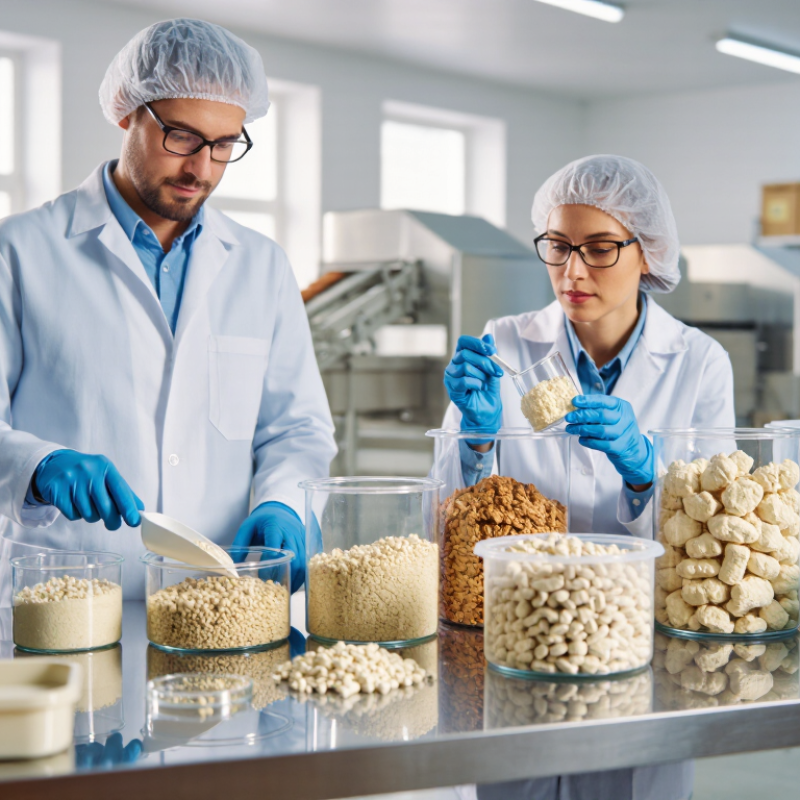
Processing conditions matter. Moisture, temperature, residence time, and cooling can change firmness and expansion. After production, the material is dried and packed for storage. Before cooking, users usually soak it in warm water or broth for several minutes. Pressing removes excess liquid and improves seasoning absorption. A practical trial should test hydration ratio, soaking time, and bite after cooking. Small changes can affect the final texture.
Textured soy protein appears in burgers, dumpling fillings, instant meals, soups, and nutrition-focused foods. Its neutral flavor accepts spices, sauces, and marinades. However, excessive soaking may create a soft, weak bite. Insufficient hydration leaves a dry center. For dependable sourcing, compare protein basis, moisture, particle size, microbiological results, and allergen declarations. Supplier samples should be tested under real production conditions, not only in a laboratory cup.
China’s Soy Protein Industry: Production Trends, Capacity, and Export Data
China’s soy protein industry is expanding alongside a large soybean processing base. USDA Foreign Agricultural Service data projects China’s 2024/25 soybean imports at about 109 million metric tonnes. Domestic soybean crushing is expected to approach 100 million tonnes. This supply supports textured soy protein production through defatted soy flour and concentrated protein ingredients.
Public provincial project disclosures indicate that many Chinese processing lines operate at 10,000 to 50,000 tonnes annually. Larger facilities often combine extrusion, drying, and packaging equipment. China Customs and UN Comtrade data show steady exports under HS 210610, which covers textured protein substances and other protein concentrates. The classification is broad. It does not isolate textured soy protein perfectly.
Export demand is strongest in food manufacturing markets across Asia, Europe, and the Middle East. Buyers increasingly request stable texture, low moisture, traceable soybeans, and clear allergen controls. Production efficiency is improving, but capacity figures remain difficult to verify. Some published estimates combine installed capacity with actual output. That is a weakness. A careful supplier review should compare audited production records, laboratory results, and shipment history. USDA supply data explains China’s scale, while customs statistics reveal trade direction and product limitations.
Supplier Comparison: Protein Content, MOQ, Pricing, and Delivery Capacity
Choosing a textured soy protein supplier requires more than comparing quoted prices. Protein content should be checked on a dry basis, using a recognized laboratory method. Some suppliers list 50% protein, while others offer products above 70%. The difference affects meat analog texture, nutrition claims, and recipe cost. Ask for recent test reports, moisture limits, particle size, and allergen controls. Certificates alone are not enough.
MOQ often separates large factories from flexible manufacturers. A standard container may require 10–20 metric tons, while smaller trial orders can start near 500 kilograms. Small quantities usually carry higher packaging and transport costs. Pricing changes with protein level, color, flavor, packaging, and soybean market conditions. A low price may hide weaker consistency. Request a complete quotation, including inland delivery, export packing, and documentation.
Delivery capacity should be measured in practical terms. Ask about monthly production volume, warehouse stock, lead time, and port options. A supplier claiming high capacity should explain how it handles peak-season orders. For a regular contract, confirm whether one batch can be reserved for your specification. Samples may arrive quickly, but bulk production can take three to eight weeks. This gap is easy to underestimate. In my experience, buyers sometimes compare prices before confirming texture performance, then pay more through reformulation and delayed launches. A small pilot order remains useful, even when the supplier appears technically strong.
Food Standards for TVP: GB/T 22493-2008, HACCP, ISO 22000, and BRCGS
China’s textured soy protein manufacturers and suppliers should treat food standards as daily controls, not certificate decorations. GB/T 22493-2008 provides a technical reference for textured soybean protein, including product quality and testing expectations. Buyers should review specifications, batch records, and laboratory results before approval.
HACCP identifies hazards across cleaning, soaking, extrusion, drying, and packing. A practical supplier should show critical limits, monitoring logs, and corrective actions. Look for allergen segregation and verified sanitation. Metal detection matters. So does moisture control, because uneven drying can affect texture and storage stability. Traceability should connect one finished batch to raw soybeans and packaging materials.
ISO 22000 adds a broader food safety management framework, while BRCGS audits site hygiene, process control, documentation, and management responsibility. During a factory visit, ask to see recall exercises and calibration records. Ask how complaints are investigated. A certificate alone is not proof of consistent performance. No audit catches every weak handoff. Suppliers can also have incomplete records or delayed corrective actions. That deserves careful questioning, not automatic rejection. Experienced buyers should compare audit findings with actual production behavior, sample results, and shipment history. Supplier approval becomes stronger when evidence matches the product in the bag.