How to Use Protein Concentrate for Optimal Health Benefits?
Protein Concentrate is gaining attention in the health and wellness sector. This rise is backed by significant data. According to a report by the International Journal of Food Sciences, protein consumption has increased by over 20% in the last decade. People are seeking ways to enhance their health through nutrition.
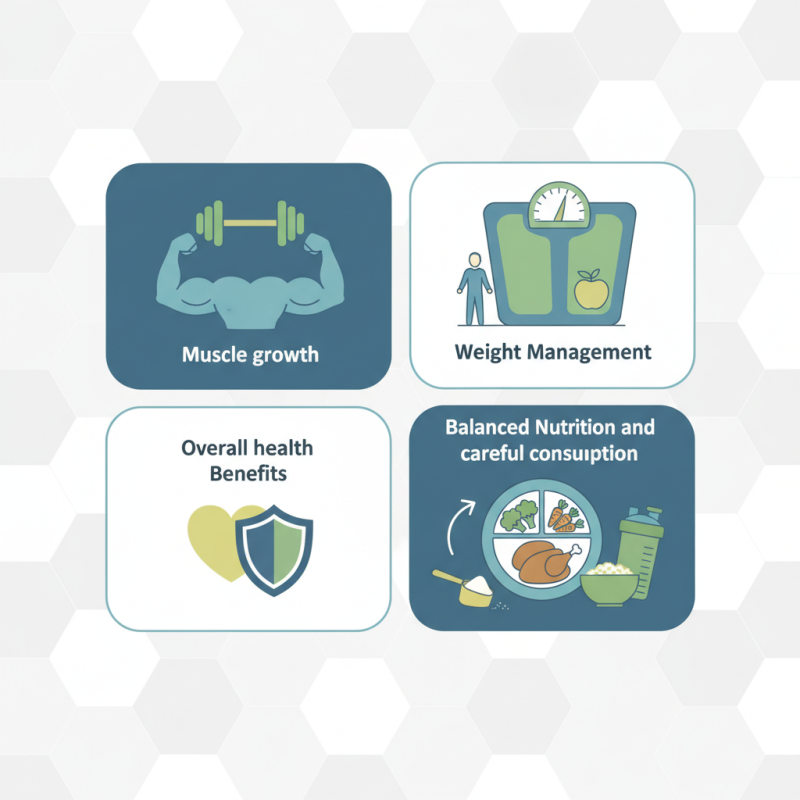
Many turn to Protein Concentrate for various benefits. It can support muscle growth, weight management, and overall health. A study published in Nutrients indicates that protein-rich diets can improve body composition and increase metabolic rate. However, some individuals may overlook appropriate serving sizes and context of use.
Adopting Protein Concentrate requires careful reflection. Not everyone needs high protein intake, and excessive consumption can lead to health issues. Choosing the right type of Protein Concentrate is crucial. This decision often requires knowledge and advice. Balancing protein with other nutrients is essential for optimal health outcomes.
Understanding Protein Concentrate: What It Is and Its Benefits
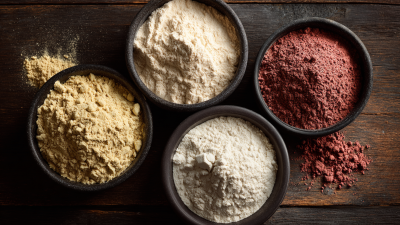
Protein concentrate is a refined source of protein, derived from various food sources. It is often made from milk, soy, or peas. This product is dense in protein, with low levels of fat and carbohydrates. This makes it a popular choice for those seeking to boost their protein intake without added calories. It's versatile and can be mixed into drinks, smoothies, or baking recipes.
The benefits of protein concentrate are extensive. It aids in muscle building and recovery, especially after workouts. For those who struggle to meet protein needs through whole foods, protein concentrate can bridge that gap. Some may find it convenient for meal replacement or snack supplementation. However, not everyone reacts the same way to protein concentrates. Some individuals may experience digestive discomfort or allergies.
It's important to choose high-quality sources and be mindful of your body’s response. Track how you feel after incorporating it into your diet. Listening to your body can help determine the optimal amount for your needs. Experimentation may lead to a better understanding of what works best for you.
Types of Protein Concentrates: Whey, Soy, Pea, and More
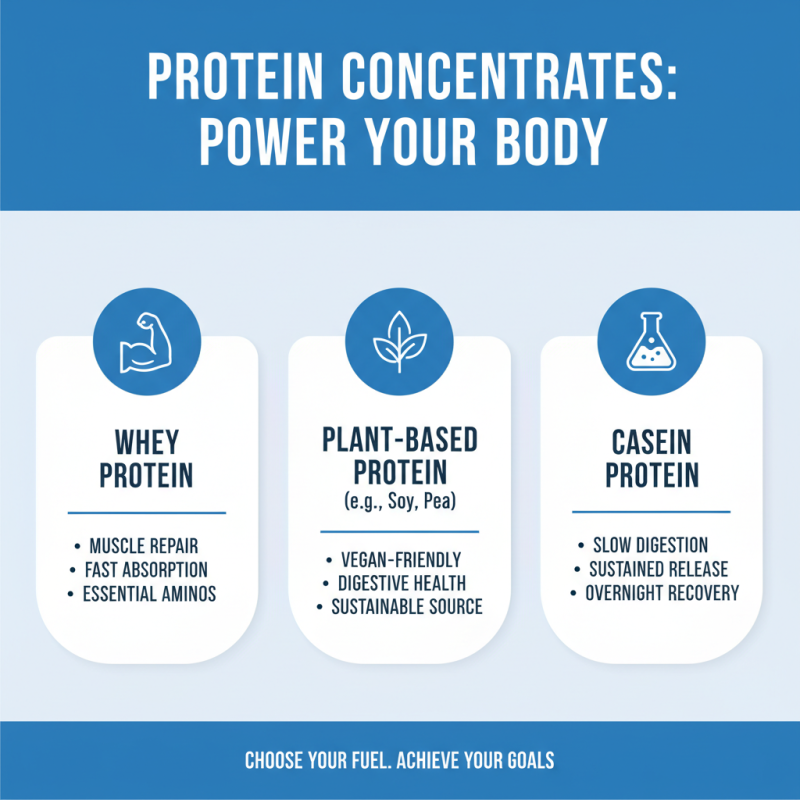
Protein concentrates come in various types. Each offers distinct benefits and can fit different dietary needs. Whey protein, derived from milk, is popular among athletes. It absorbs quickly, promoting muscle repair post-workout. This form contains essential amino acids, which help build muscle mass.
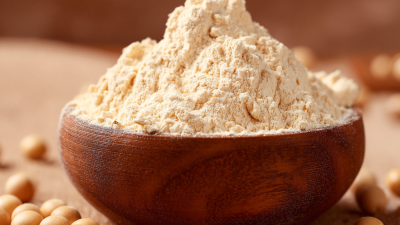
Soy protein is an excellent choice for vegetarians and vegans. It provides a complete protein source. Soy can support heart health and is low in saturated fats. Pea protein is hypoallergenic and easily digestible. It’s suitable for those with lactose intolerance or allergies. This type also contributes to muscle growth and overall health.
Tips: When choosing a protein concentrate, consider your dietary preferences. If you're lactose intolerant, opt for pea or soy. Always consult with a healthcare professional before making changes. Remember, more protein isn't always better. Balance is key. Listen to your body and adjust accordingly.
How to Incorporate Protein Concentrate into Your Daily Diet
Incorporating protein concentrate into your daily diet can offer substantial health benefits. According to the USDA, adults require about 46-56 grams of protein daily. However, many struggle to meet this requirement consistently. Protein concentrates, derived from whey, soy, or pea, can bridge this gap effectively. They provide a concentrated source of protein that is easily digestible and versatile.
One simple method is adding protein concentrate to smoothies. Combine fruits, vegetables, and a scoop of protein to enhance nutrient density. This can be particularly useful post-workout. Research suggests that consuming protein after exercise aids muscle recovery. Alternatively, you might mix protein concentrate into oatmeal or yogurt for breakfast. This addition can boost protein content by up to 30 grams.
However, moderation is key. Over-reliance on protein concentrates can lead to digestive issues for some. Balancing your intake with whole food sources is essential. Incorporating a variety of proteins, such as grains and legumes, ensures a well-rounded diet. Reflect on how your body reacts to these changes. Adjust as necessary to find what works best for you.
Protein Concentrate Intake for Optimal Health Benefits
This chart illustrates the recommended protein intake across different meals for optimal health benefits. Incorporating protein concentrates into your daily diet can enhance your overall health and well-being.
Recommended Dosages and Timing for Protein Concentrate Intake
Protein concentrate can offer several health benefits when used correctly. The timing and dosage of intake play crucial roles in maximizing these benefits. According to a report by the International Journal of Sports Nutrition, consuming 20 to 30 grams of protein concentrate post-workout enhances muscle recovery. This practice helps repair muscles and facilitates growth.
Timing is just as significant. Studies indicate that protein synthesis peaks after exercise. Thus, taking protein within 30 minutes post-workout can be advantageous. The American Journal of Clinical Nutrition suggests that spreading protein intake throughout the day leads to better muscle health and overall well-being. Aim for 3 to 4 servings of protein throughout your day.
Many people overlook the importance of context. Individual needs vary based on activity level and age. Athletes might require more protein than sedentary individuals. Not all protein concentrates are equal, and not everyone may digest them well. It’s essential to listen to your body and adjust accordingly. Monitoring your energy levels and recovery can guide your intake strategy effectively.
Potential Risks and Considerations When Using Protein Concentrate
Using protein concentrate can provide significant health benefits, but it is important to consider potential risks. While protein is essential for muscle growth and repair, excessive intake can strain the kidneys. A 2021 study indicated that high-protein diets may lead to kidney damage in susceptible individuals. It's crucial for people with pre-existing kidney conditions to exercise caution.
Digestive issues can also arise from using protein concentrates. Many individuals experience bloating and discomfort, particularly when consuming whey or casein proteins. Research has shown that nearly 60% of protein supplement users report gastrointestinal problems. These issues underscore the need for gradual introduction and monitoring of protein intake.
Moreover, not all protein concentrates are created equal. Some may contain additives or artificial sweeteners that could have negative health impacts. A report published in 2022 highlighted that over 30% of protein supplements tested contained contaminants like heavy metals. Selecting a quality product with transparent ingredients is vital for health safety. Recognizing these potential risks can help individuals make informed choices about their protein intake.
How to Use Protein Concentrate for Optimal Health Benefits? - Potential Risks and Considerations When Using Protein Concentrate
| Aspect |
Details |
| Protein Sources |
Whey, Soy, Pea, Rice |
| Optimal Serving Size |
20-30 grams per serving |
| Potential Benefits |
Muscle growth, weight management, recovery |
| Recommended Timing |
Post-workout or between meals |
| Possible Risks |
Digestive issues, allergies, kidney strain |
| Considerations Before Use |
Consult with a healthcare provider |