China Best Amino Protein Powder Suppliers for Bulk Buyers
Choosing a China-based Amino Protein Powder supplier is not just a price comparison. Bulk buyers need a product that performs consistently from one shipment to the next. A scoop may look identical in a sample and a full order, yet its solubility, flavor, and protein content can vary. Details matter.
Protein metabolism researcher Dr. Stuart Phillips has discussed the importance of protein quality alongside intake. Put as a sourcing takeaway, not a verbatim quotation: “Look beyond the protein number; consider quality and how the product will be used.” For buyers, that means checking the ingredient specification, amino acid profile, testing methods, and batch documentation. Ask for a recent certificate of analysis, then confirm that its figures match the product specification. A document alone is not proof of every claim.
Check the practical details, too. Does the powder disperse in cold water? Is the flavor consistent? Can the supplier explain lead times, minimum order quantities, packaging options, and how it handles specification changes? Request a representative sample and compare it with production records where possible. Small checks help. They do not guarantee a perfect order, and supplier pages rarely tell the whole story. That is worth remembering.
This guide explores how bulk buyers can assess Chinese suppliers, compare product options, and ask better questions before committing. It also flags a common weakness: a low quoted price means little if quality controls or communication are unclear. Verify, compare, and keep records.
Amino Protein Powder: Composition, Forms, and Bulk Applications
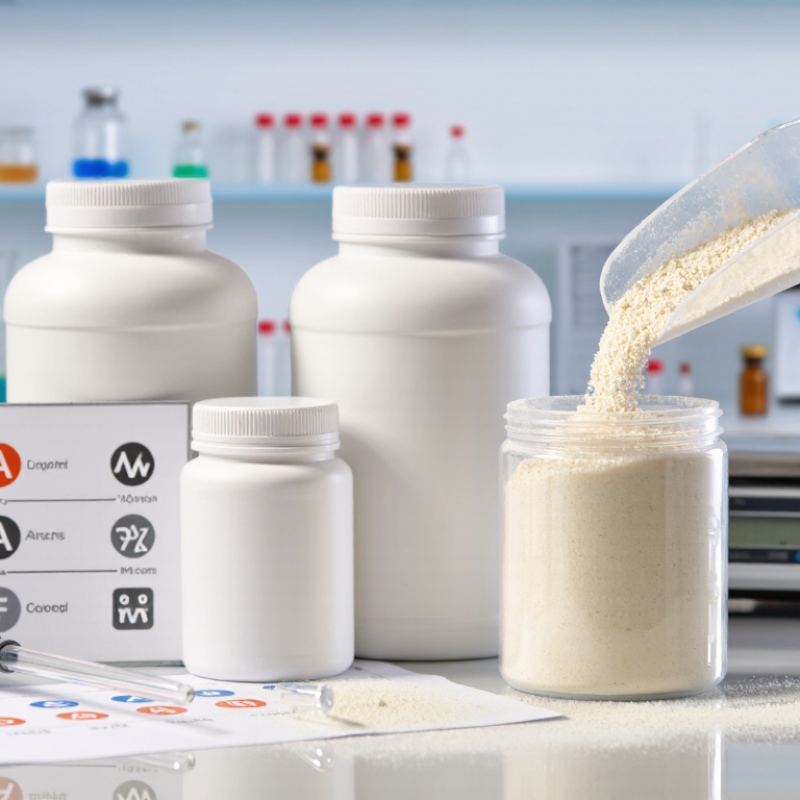
Amino protein powder is not one uniform ingredient. Depending on its formulation, it may contain hydrolyzed protein, free-form amino acids, or a blend. These forms behave differently in water and finished products. Bulk buyers should check the declared protein source and amino acid profile rather than relying on the product name alone. Small details matter.
Powders may be used in ready-to-mix drinks, nutrition bars, and dry blends. Hydrolyzed ingredients can disperse differently from less-processed proteins, while free amino acids may bring distinct tastes. Particle size, moisture, and added carriers can also affect mixing and storage. A powder that looks fine in a sample jar may clump in a large production tank. That is easy to overlook.
Before placing a bulk order, review the specification sheet, allergen information, and batch-specific certificate of analysis. Ask how identity, composition, and microbiological quality are assessed, and confirm packaging suits the expected storage conditions. A pilot run can reveal issues with flavor, flow, or solubility before full-scale use. It is not a perfect forecast, though: processing equipment and other ingredients may change the result.
China’s Amino Protein Powder Supplier Landscape
China’s amino protein powder supplier landscape includes manufacturers focused on fermentation, hydrolysis, blending, and export-ready ingredient supply. Their capabilities differ. Some produce amino-acid-rich powders in-house, while others source inputs and specialize in mixing, drying, or packing. Buyers should clarify which steps happen at the supplier’s own facility. A polished website alone does not prove process control.
For bulk evaluation, request a current specification sheet, a representative batch certificate, an amino acid profile, and clear test methods. Compare product claims with independent laboratory results where practical. Check solubility in cold water, taste, color, moisture, and how the powder behaves after opening. Ask about batch traceability, packaging liners, minimum order quantity, sample lead time, and shipment schedules. Details matter.
Supplier communication can reveal operational discipline. Specific answers about batch variation and corrective actions are more useful than broad promises. Confirm how formula changes, raw-material substitutions, and delays are documented. A supplier may quote quickly yet need several days to provide consistent technical records. That is not automatically a warning, but it deserves follow-up. The process is rarely perfectly tidy. Even capable suppliers can differ in flavor, dispersibility, and delivery reliability, so buyers should assess repeated batches rather than one attractive sample.
China Amino Protein Powder Supplier Landscape: Amino Acid Reference Benchmarks
Use these adult reference values as one point of comparison when reviewing amino acid specifications from bulk suppliers. They are nutritional benchmarks, not supplier-specific test results.
Source: FAO, Dietary Protein Quality Evaluation in Human Nutrition, Food and Nutrition Paper 92 (2013). Values shown are the scoring pattern for adults, in mg per g of protein.
Sourcing, Sampling, and Negotiating Wholesale Orders
When comparing China-based amino protein powder suppliers, request current specifications and batch-specific test documents. Ask for the protein source, amino acid profile, and testing methods. Check that the sample label, certificate, and batch identification match. A polished document is useful, but details matter. Review microbiological results and confirm who performed the tests. If a result is unclear, ask for a written explanation rather than guessing.
A sample can still mislead. Test it in your own formulation, since flavor, solubility, and texture may change after blending. Record the batch number and keep a sealed reference sample for comparison. Before negotiating, define your target order size, packaging format, delivery schedule, and acceptance criteria. Compare quotations against the same specifications, not just the price per kilogram. Request separate figures for sampling, packaging, and freight. Clarify how changes in raw material or production timing will be communicated. Negotiate a trial order before committing to larger volumes. It may feel slower. But it can reveal gaps in communication early. Leave room to reconsider; a low quote is not helpful if the product varies between batches.
Quality Standards, Documentation, and International Shipping
Bulk buyers evaluating amino protein powder suppliers in China should start with verifiable quality controls, not polished claims. Ask for a current specification sheet and a batch-specific certificate of analysis (COA). Check protein content, amino acid profile, moisture, microbiological results, and relevant contaminant testing. Look for test methods, limits, dates, and laboratory identification. Traceability matters. Each lot should connect to production records and retained samples. A supplier’s quality system may include sanitation records, equipment calibration, and change control. Request evidence that applies to the product and facility. Do not assume one certificate covers every shipment.
International shipping deserves the same scrutiny. Confirm product names, weights, package counts, lot numbers, and consignee details across invoices, packing lists, and shipping documents. Ask which origin or health documents are available, then check destination requirements with your importer or customs professional. Packaging should have intact seals and moisture protection; inspect pallet wrapping and carton labels before dispatch. Small details matter. Agree in writing on Incoterms, transit estimates, insurance, and responsibility for document corrections. Delays and humidity can affect powder, even when paperwork is complete. A common oversight is leaving label translations until late. Request pre-shipment photos and document drafts early, with time to correct discrepancies. A neat file helps, but it is not proof by itself.