Choosing the right Milk Protein Powder starts with a practical question: what do you need it to do? A scoop stirred into cold water behaves differently from one blended into oatmeal. Your tolerance, routine, and food preferences matter as much as the label. Small details count.
Sports nutrition researcher Dr. Stuart Phillips has studied protein needs and muscle health. A practical paraphrase of his research is: “Choose a protein source that supports your needs, alongside a balanced diet.” This is not a product endorsement or a direct quotation. It is a reminder to judge powder in context, not by bold packaging claims.
Milk protein powders commonly contain casein, whey, or a blend of both. Check the protein per serving, ingredient list, serving size, and any added sugars. If lactose bothers you, review the product details carefully; formulations vary. Look for clear quality-testing information, too. A polished label alone proves little.
Then consider how you will actually use it. Will it mix smoothly in a shaker? Does the flavor work in plain yogurt, or only in a sweet smoothie? Those small tests can reveal more than a marketing promise. There is no perfect choice for everyone. And routines change. A powder that suits your training today may not suit your appetite, budget, or digestion later. That deserves a second look.
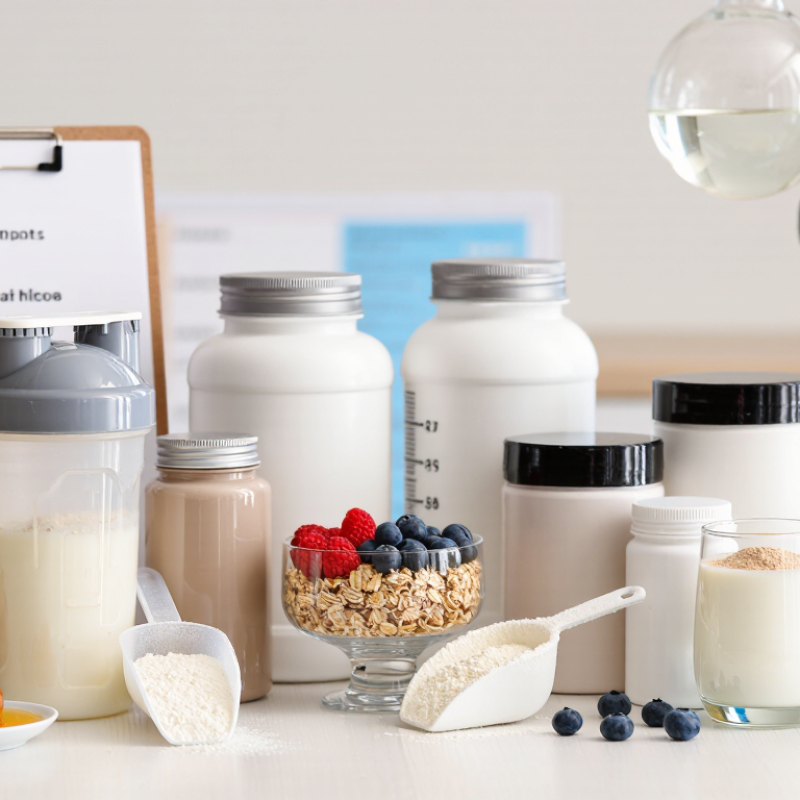
Define your goal before comparing milk protein powders. If you want a convenient way to add protein across the day, check grams per serving, serving size, and ingredients. Cow’s milk protein is typically about 80% casein and 20% whey, a composition described in the U.S. Dairy Export Council’s Reference Manual for U.S. Milk Powders. That ratio is a useful starting point, not a guarantee: processing can change a powder’s composition. Read the label.
The two proteins behave differently during digestion. In a small 1997 study published in the Proceedings of the National Academy of Sciences, casein produced a slower, more sustained rise in circulating amino acids than whey. The study involved a specific group and should not be treated as proof that one powder is best for everyone. For a quick post-training option, you might prefer a product with more whey; for a slower-digesting blend, casein may suit your routine. Still, timing is not magic. I would compare the actual protein amount and ingredient list before paying extra for a ratio claim, and check whether the product fits your dietary needs.
| How to Choose the Best Milk Protein Powder? — Define Your Goal and Consider Milk Protein’s Typical 80:20 Casein-to-Whey Ratio | ||||
|---|---|---|---|---|
| Your Goal | Protein Type to Consider | Typical Protein Profile | What to Check on the Label | Practical Consideration |
| Choose a protein source that reflects the natural mix in milk | Milk protein concentrate or milk protein isolate | Generally casein-dominant, often described as approximately 80% casein and 20% whey. The exact ratio can vary by product and processing. | Protein per serving, ingredient list, and any stated casein-to-whey ratio | These products provide both milk-protein fractions. Concentrate and isolate can differ in protein concentration and amounts of lactose and other milk components. |
| Prioritize a whey-dominant protein | Whey protein concentrate or whey protein isolate | Predominantly whey protein; it does not have the typical 80:20 casein-to-whey profile of milk protein. | Whether the product is a concentrate or isolate, protein per serving, and ingredient list | Whey is a milk-derived protein. Products may differ in lactose content, so check the label if lactose is a concern. |
| Prioritize a casein-dominant protein | Micellar casein or another casein protein powder | Predominantly casein rather than the mixed casein-and-whey profile found in milk protein. | Whether casein is the main protein source and whether other proteins are added | Casein powders are not interchangeable with a mixed milk-protein powder; compare the ingredient list and stated protein source. |
| Compare products for a specific dietary preference | A product whose ingredients and nutrition label fit your needs | Protein blend and proportions vary; the product name alone may not reveal the exact composition. | Milk allergen statement, ingredients, serving size, protein amount, and any added sweeteners or flavorings | Milk protein is not suitable for someone with a milk-protein allergy. Lactose content varies, so people concerned about lactose should check product information. |
| Ratio note: The approximately 80:20 casein-to-whey ratio refers to the typical protein composition of milk, not a guaranteed ratio for every powder. Processing, ingredients, and product formulation can change a powder’s profile; use the product label for its stated details. | ||||

How to Choose the Best Milk Protein Powder?
Milk protein concentrate (MPC) can range from 42% to 85% protein by weight. Milk protein isolate (MPI) contains at least 90%. That difference can matter when you want more protein in a smaller serving. But the ingredient’s concentration is not the same as the protein percentage in your finished powder. Added flavors, carbohydrates, and other ingredients change the final numbers. Check the nutrition panel and serving size, not just the ingredient description.
Tips: Compare products on the same basis. Divide protein grams per serving by powder grams per serving, then multiply by 100. For example, 24 grams of protein in a 30-gram scoop equals 80%. Check the ingredient list, too. Milk proteins contain milk allergens, and added ingredients can affect taste and texture.
A higher percentage is not automatically the better choice. MPC may suit recipes where a fuller texture is welcome, while a higher-protein MPI can help keep a shake more protein-dense. Mix a small serving with cold water and note how smoothly it blends. Numbers need context. Taste matters too. I’d be wary of choosing by concentration alone; texture, serving size, and your intended use deserve a look as well.
How to Choose the Best Milk Protein Powder?
Start with the protein grams per serving, not the scoop’s total weight. The FDA lists 50 g as the Daily Value for protein on Nutrition Facts labels. A serving with 25 g provides half that reference amount. It is a comparison point, not a personal prescription. Your needs vary with body size, age, health, and activity. Small detail, big difference: check whether the serving means one level scoop or two.
The International Society of Sports Nutrition’s 2017 position stand reports that many exercising people may benefit from 1.4–2.0 g of protein per kilogram of body weight daily (Jäger et al., Journal of the International Society of Sports Nutrition). That range is not a universal target. For a 70 kg adult, it equals roughly 98–140 g per day, so a 25 g serving would contribute a useful portion—not the whole plan. I still find the label math easy to overvalue.
Check the ingredient list and serving size together. Milk protein powders may contain whey and casein, which digest at different rates; people sensitive to lactose should also review the product’s lactose information. Compare protein per serving alongside calories and added sugar, and consider how the powder fits with meals. A high number can look impressive. Context matters more.
Milk protein powder may contain whey, casein, or both, so check the ingredient list—not just the front label. The U.S. FDA lists milk among the nine major food allergens and requires its source to be declared when used as an ingredient. A milk allergy is different from lactose intolerance: one involves an immune response, the other difficulty digesting lactose. If you have a milk allergy, avoid milk-derived proteins and ask the manufacturer about cross-contact controls.
Tips: For lactose concerns, check the product’s lactose information rather than assuming all powders contain the same amount. The National Institute of Diabetes and Digestive and Kidney Diseases estimates that about 68% of the world’s population has lactose malabsorption, though rates vary widely. Scan for sweeteners such as sucralose or sugar alcohols, plus gums and flavorings. Small details matter.
“Unsweetened” does not mean additive-free. Compare serving sizes and ingredient lists, and check whether a sweetener or thickener bothers you. FDA labeling rules help identify declared ingredients, but they cannot tell you how your body will respond. Even careful readers can find labels confusing; when a term is unclear, contact the manufacturer or ask a qualified health professional.
A milk protein powder label can look precise while leaving important questions unanswered. Look for a certificate of analysis tied to the exact batch you are considering, not just a general product sheet. The report should identify the lot number, test date, and laboratory, and list measured results for protein content and relevant contaminants, such as heavy metals and microbes. Independent testing adds useful scrutiny, but it does not make every product automatically safe or suitable for everyone.
Check whether the testing laboratory is independent and uses recognized methods. If the report gives only “pass” without results or clear limits, ask what was measured. A transparent seller should make batch records easy to find or provide them when requested. Match the lot number on the container to the report; even a small mismatch matters. Keep the package nearby while checking.
Details matter. A lot.
Testing has limits, too. Results describe the sample tested, not necessarily every scoop in every tub, and methods can differ. I would treat a clear report as one piece of evidence, alongside the ingredient list, storage instructions, and sensible quality controls. Some reports may be difficult to read; that is a fair reason to request plain-language clarification, not to assume the worst.