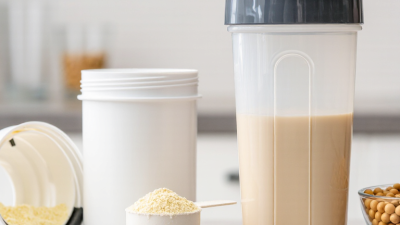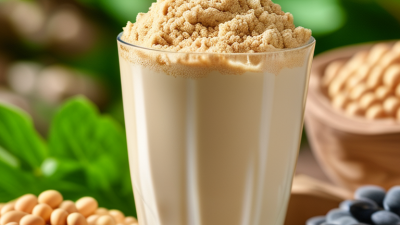
Choosing Soy Protein Isolate suppliers in 2026 means looking beyond a price per metric ton. A supplier’s specification sheet may show protein content, yet say little about solubility, flavor, or performance in your finished product. Small differences matter. A pale powder should disperse consistently in a test beverage, not leave grit at the bottom of the glass.
The supply base is large, but that does not make every ingredient interchangeable. The USDA Foreign Agricultural Service’s Oilseeds: World Markets and Trade report estimated 2024/25 global soybean production at about 420.9 million metric tons. That figure describes soybeans, not isolate availability or supplier quality. Buyers still need to check protein assay methods, batch-to-batch variation, microbiological documentation, allergen controls, traceability, and production capacity. Request recent certificates of analysis, then test representative samples under your own processing conditions. Paper claims are not proof.
Soy nutrition researcher Mark Messina, PhD, has said, “The totality of the evidence indicates that soy is safe and healthful.” That statement concerns soy broadly; it does not certify any particular supplier or product. Treat it as context, not a purchasing endorsement. Strong evaluations combine technical data, documented quality systems, responsive communication, and a clear plan for disruptions. Ask how the supplier handles specification changes and delayed shipments. Then verify the answers. A polished audit file can still miss what happens on a busy production line, and buyers sometimes discover that too late. The right partner is not simply the one with the lowest quote, but the one whose material performs reliably in your process.

Before comparing soy protein isolate suppliers, define the job the ingredient must do. A beverage needs fine dispersion and low grittiness; a meat alternative may need water binding, firmness, and predictable cooking performance. Record your target protein level, particle size, flavor limits, solubility, and processing conditions. Be specific. “Good functionality” is not a usable specification.
Set measurable acceptance limits, then ask suppliers for methods and batch data. Codex Standard CXS 175-1989 defines soy protein isolate at a minimum of 90% protein on a dry-weight basis, using the nitrogen conversion factor of 6.25. Treat that as a baseline, not proof of application fit. USDA FoodData Central reports about 88.3 grams of protein per 100 grams for its soy protein isolate entry; its food-composition figure is not a supplier guarantee or a substitute for dry-basis testing. Request certificates of analysis, test-method details, and samples for your own pilot line. Check flavor after heating, not only in the bag. A mistake teams make is choosing on protein percentage alone. I have to admit: a tidy specification can still miss a real production problem. Ask for lot-to-lot results and confirm the supplier’s values match your lab’s method.
Soy protein isolate suppliers generally fall into three groups: manufacturers, ingredient distributors, and contract processors. Manufacturers may offer closer visibility into production and quality controls. Distributors can combine products from several plants, which may help with smaller orders. Contract processors can suit custom specifications, but buyers should clarify who controls testing and batch records. Ask for evidence.
Compare capacity with your actual demand, not a headline figure. Request monthly output, typical order size, lead time, and available backup production. A polished capacity figure can still hide seasonal bottlenecks; it deserves a second look. Ask how the supplier handles specification changes, delayed shipments, and rejected batches. Review recent certificates of analysis and confirm that protein content, moisture, and microbiological limits match your requirements. Small is not weak. A smaller plant may provide attentive service, though it may have less flexibility during peak demand.
Sourcing regions affect more than the quoted price. North and South American suppliers may offer access to large soybean-growing areas, while East Asian processors can be closer to some major food-manufacturing hubs. Actual advantages depend on the plant, crop season, port route, and destination. Check shipment history and traceability back to the processing facility. Compare landed cost, transit time, and disruption plans—not just the price per tonne. Regional averages are useful, but they can mislead. Verify the details for each supplier.
| Supplier Type | Typical Production Scale | Common Sourcing Regions | Typical Strengths | Key Checks for Buyers | Best Fit |
|---|---|---|---|---|---|
| Integrated soybean processor | Large, often multi-line operations; potential annual isolate output may be in the tens of thousands of metric tons. Confirm actual isolate capacity, not total soy-processing capacity. | United States, Brazil, Argentina, China | May control more stages from soybean crushing to protein processing; can offer consistent access to soy raw material and large-volume programs. | Ask for site-specific isolate capacity, utilization, product specifications, allergen controls, traceability, and contingency plans. | High-volume buyers seeking long-term supply and repeatable specifications. |
| Specialist soy-protein manufacturer | Medium to large; capacity varies by facility and product portfolio. Request annual capacity for the exact isolate grade and available monthly allocation. | China, United States, Europe, Brazil | Focused expertise in protein ingredients; may provide several grades or functional options for food and beverage applications. | Check protein calculation basis, solubility, flavor, microbiological limits, process controls, and sample-to-production consistency. | Buyers prioritizing application support, technical documentation, or multiple grades. |
| Regional ingredient producer | Small to medium; often suited to regional demand or scheduled production runs. Verify minimum order quantity and lead time. | Europe, East Asia, South Asia, North America | Potentially shorter regional delivery routes and closer coordination on local labeling or customer requirements. | Confirm manufacturing location, export experience, backup capacity, food-safety certification scope, and shipping terms. | Regional buyers, mid-sized users, or companies testing a new formulation. |
| Ingredient distributor or trader | Does not necessarily manufacture the product; available volume depends on producer allocation and inventory. | Products may be sourced from China, the Americas, or Europe and stocked in local markets. | Can consolidate orders, offer local warehousing, and provide access to more than one producer or grade. | Identify the actual manufacturer and plant, request lot-level documents, and check how substitutions and stock replenishment are managed. | Smaller orders, local purchasing, or buyers needing inventory and logistics support. |
| Private-label or contract manufacturer | Capacity depends on the contracted factory; production may be shared across customers and product formats. | Commonly available through manufacturing networks in China, Europe, and the Americas. | May support customized packaging, labeling, or coordinated ingredient supply for a finished product program. | Clarify who owns the specification, who releases each lot, change-control procedures, audit access, and continuity if the factory changes. | Brands and food manufacturers seeking a packaged or coordinated supply solution. |
| Specialty or application-focused producer | Often limited or product-specific capacity; confirm campaign frequency and whether the grade is made continuously or to order. | North America, Europe, and Asia, depending on application and manufacturing base. | May focus on tailored functionality, such as dispersibility, emulsification, or performance in a particular food system. | Validate functionality in the buyer’s own formulation, alongside composition, sensory profile, shelf-life data, and scale-up capability. | Developers of specialized beverages, meat alternatives, nutrition products, or other demanding formulations. |
| Capacity note: Production scale descriptions are indicative screening categories, not verified capacity claims for any specific supplier. Soy isolate output depends on the individual plant, product mix, operating schedule, and available soybean inputs. Request current site-level figures and supporting documentation before qualification. | |||||
| Regional sourcing note: The regions listed are major soybean-growing or soy-processing areas and common sourcing locations for soy ingredients; they do not guarantee that a supplier’s isolate is made from beans grown in the same region. Confirm country of origin, processing location, identity-preserved or non-GMO status where relevant, and traceability requirements. | |||||
When evaluating soy protein isolate suppliers in 2026, ask for evidence, not just a polished specification sheet. Request a recent certificate of analysis tied to a specific lot. Check that protein content, moisture, microbiological results, and test methods are clearly stated. Compare results across several lots; one clean report proves little. Ask how the supplier handles out-of-spec results and whether customers receive notice when a process changes.
Certifications can support confidence, but verify their scope, validity dates, and issuing bodies. A certificate may cover a facility without covering every product or process. Ask for the current audit summary and documented controls for allergen separation, sanitation, and foreign-material prevention. If answers are vague, request records or a technical discussion. Logos alone are not enough.
Traceability should connect finished powder to its production lot and incoming soy materials. Request a sample trace exercise: how quickly can the supplier identify affected lots, production dates, and distribution records? Check whether documents agree on lot codes. Small inconsistencies matter. They may be clerical, but they can slow an investigation. I would also review retention-sample practices and complaint handling. No system is flawless; a supplier’s willingness to explain gaps, corrective actions, and follow-up is often more revealing than a perfect-looking brochure.
A practical 100-point supplier evaluation scorecard
These are recommended evaluation weights, not survey results or supplier ratings. Verify current certificates with their issuing bodies, review food-safety and quality records, and confirm that lot-level documents support traceability from raw materials through finished product.
Choosing a soy protein isolate supplier means testing performance, not just comparing quoted prices. Codex Alimentarius standard CXS 175-1989 defines soy protein isolate as containing at least 90% protein on a dry basis. Ask for recent certificates of analysis and compare protein, moisture, dispersibility, viscosity, and flavor across lots. Small differences matter. Test samples in your actual drink, bar, or meat-alternative formula; a powder that mixes well in water may behave differently in a finished product. USDA’s 2024 Oilseeds: World Markets and Trade report put 2023/24 global soybean production at about 397 million metric tons. That scale does not guarantee steady isolate supply, but it makes origin, processing capacity, and shipment records worth checking.
Compare the full delivered cost, including freight, minimum order quantity, packaging, and payment terms. A lower price can lose its appeal if the product requires extra processing or arrives late. Request historical lead times, on-time delivery records, lot traceability, and a written plan for production interruptions. Confirm that the supplier can provide consistent specifications and advance notice of changes. One detail is easy to miss: sample performance may not represent every commercial lot. Keep retained samples and review results over several shipments. A careful supplier comparison may take longer than expected, but it can reveal where savings are real—and where the evidence is thin.
When assessing soy protein isolate suppliers in 2026, check that their documentation matches your destination markets and intended use. Ask for current product specifications, allergen controls, traceability records, and certificates of analysis covering protein, moisture, and microbiological limits. Codex Alimentarius standard CXS 175-1989 provides an international reference for vegetable protein products, but it does not replace local requirements. Verify the supplier’s own compliance evidence. Paperwork can look tidy; production records matter more.
Sustainability claims need the same scrutiny. FAO’s 2021 Global Remote Sensing Survey found that agricultural expansion was associated with nearly 90% of global deforestation; cropland expansion accounted for 52.3%. That figure is not soy-specific, so avoid treating it as proof about an individual supplier. Request sourcing-region data, land-use policies, and evidence of traceability to farms or collection points. Check whether claimed reductions include processing energy, water, and transport. Numbers without boundaries are weak evidence.
Supplier fit is operational, too. Compare protein content and solubility across samples, then test them in your actual recipe, not just in a bench-top shake. Confirm lead times, minimum order quantities, backup production sites, and how quickly deviations are reported. USDA Foreign Agricultural Service estimated global soybean production at about 422 million metric tons for 2024/25, underscoring the scale of the supply base, not the reliability of any one processor. Ask for a recent batch record. Then ask again.