How to Choose a Soy Isolate Protein Powder Supplier?
Choosing a Soy Isolate Protein Powder supplier is not just a price comparison. The wrong specification can leave a finished drink gritty, weak in protein, or inconsistent from batch to batch. USDA’s Oilseeds: World Markets and Trade, May 2024, estimated global soybean production at about 397 million metric tons in 2023/24. That scale offers buyers many sourcing options, but it does not guarantee uniform raw materials or reliable processing. The FAO’s 2013 report, Dietary Protein Quality Evaluation in Human Nutrition, explains why protein quality and amino-acid composition matter. A supplier should therefore provide a current certificate of analysis, a clear protein-testing method, traceable origin, and documented controls for microbiological quality and allergens. Ask for a sample. Test it in your actual formula.
Soy nutrition researcher Mark Messina has described soy protein as “a high-quality protein.” That statement is useful, but it cannot verify any supplier’s product. Request evidence: batch records, independent test results, and practical data on dispersibility, flavor, and shelf stability. Check whether specifications match your intended use, whether production capacity can support repeat orders, and how the supplier handles deviations. A polished brochure is not proof. Neither is a low quotation. Standards such as ISO 22000 can help assess a food-safety management system, but buyers should review the supplier’s actual records and audit scope. Small details matter: a sealed sample, a legible lot number, and a prompt answer about test methods. Even then, supplier choice involves judgment. One weak point remains: published market figures describe soybeans, not the quality of a particular isolate. Verify the product itself.
Define Soy Isolate: At Least 90% Protein on a Dry-Weight Basis
How to Choose a Soy Isolate Protein Powder Supplier?
Define Soy Isolate: At Least 90% Protein on a Dry-Weight Basis
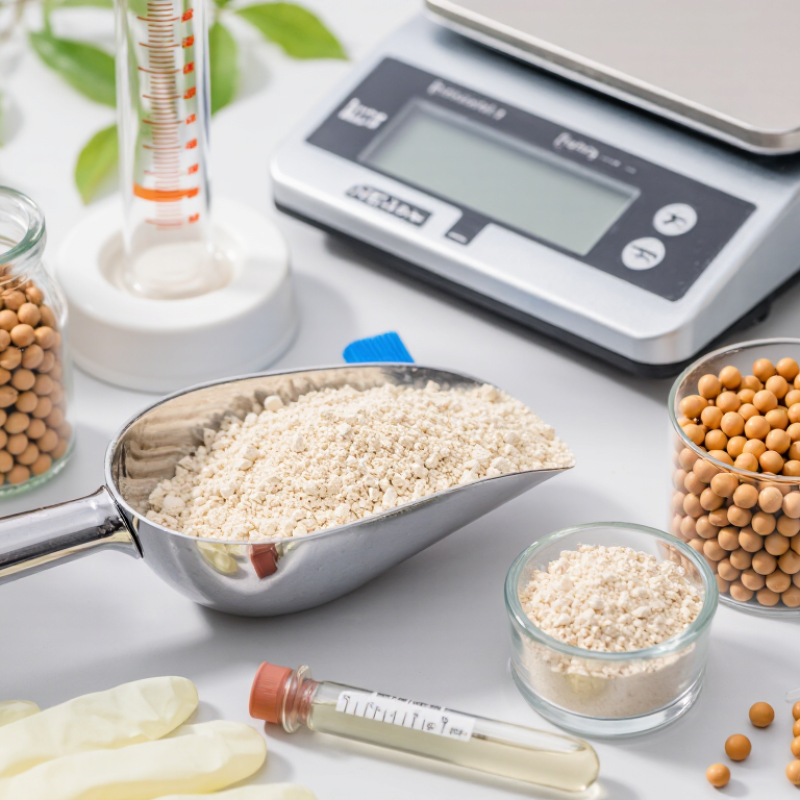
Soy protein isolate is a concentrated ingredient made by separating much of the protein from soybeans. By definition, it contains at least 90% protein on a dry-weight basis. That means the calculation excludes moisture. The percentage in a shipped powder may look lower because the powder still contains some water. Compare specifications on the same basis. Small details matter.
When evaluating a supplier, request a recent certificate of analysis for the specific lot, not just a general product sheet. Check the protein result, moisture level, test method, and lot identification. Ask how the supplier manages differences between batches. A clear answer is reassuring; a vague one deserves follow-up. I would not treat one document as the whole story. Traceability and consistent records also help you assess reliability.
Tips: Confirm whether the quoted protein percentage is dry-basis or as-is. Ask for the test method and a sample specification before ordering. Check that the powder’s color, smell, and texture match the agreed description. A faint beany note may be normal, but expectations should be discussed in advance. Don’t skip the details.
Soy Protein Ingredients: Protein Content on a Dry-Weight Basis
Soy protein isolate is defined by a minimum protein content of 90% on a dry-weight basis. Dry-weight values exclude moisture, so ask suppliers for the test method, moisture level, and protein result when comparing specifications. Soy flour and concentrate figures shown are common benchmarks; individual products may vary.
Compare Protein Quality Using the PDCAAS Scale, Capped at 1.00
PDCAAS offers a useful first screen when choosing a soy isolate supplier. It compares a protein’s limiting essential amino acid with a reference pattern, then adjusts for digestibility. The score is capped at 1.00, so higher underlying values are reported as 1.00. A perfect score is not a guarantee of identical batches. Soy isolate reached 1.00 under stated assumptions in the FAO/WHO report Protein Quality Evaluation, 1991. The FAO’s 2013 expert consultation also discussed DIAAS, which evaluates digestibility of individual essential amino acids. One number has limits.
For buyers, ask whether a supplier’s PDCAAS is tested or calculated, and request the amino-acid profile and digestibility method. Check that the reference pattern and test conditions are disclosed. Results can vary with processing and raw-material quality, even when the product name stays the same. A polished specification sheet is helpful, but it is not the whole evidence.
Tips: Compare recent, lot-specific certificates of analysis, not just a typical value. Ask for documentation behind any 1.00 claim, including the testing laboratory and method. If two suppliers both report 1.00, compare their amino-acid data, quality controls, and batch consistency; the capped score alone cannot distinguish them.
Verify Test Results Through an ISO/IEC 17025:2017-Accredited Lab
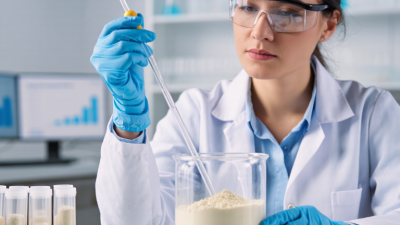
Ask the supplier for a lot-specific certificate of analysis, then verify key results with an independent ISO/IEC 17025:2017-accredited laboratory. Accreditation alone is not enough. Check that the lab’s published scope covers the analyte and method you need, such as protein measured by Dumas or Kjeldahl. USDA FoodData Central reports about 88.3 grams of protein per 100 grams for its generic soy protein isolate entry. Treat that figure as a reference, not a purchase specification; moisture and product formulation can shift results. Codex Alimentarius CXS 175-1989 also provides compositional guidance for soy protein products.
Send sealed samples from the actual production lot, not a supplier-selected showcase sample. Compare laboratory results with the specification for protein, moisture, and any relevant microbiological or contaminant limits. Request the method, reporting units, uncertainty, and sample identification on the report. That paper trail matters. A mismatch between the supplier’s certificate and independent results can point to sampling differences, method variation, or a real quality issue. No panel catches everything. Review the testing plan when the product, process, or destination market changes, and keep retain samples for follow-up. One practical weakness: retesting every lot may be costly, but skipping verification entirely leaves buyers relying on claims they have not checked.
Assess Food Safety Systems Against ISO 22000 or FSSC 22000
How to Choose a Soy Isolate Protein Powder Supplier?
Assess the supplier’s food safety system, not just its sales documents.
ISO 22000 provides a framework for managing food safety hazards across the supply chain. FSSC 22000 builds on ISO 22000 with additional scheme requirements and recognized prerequisite programs. Both can support consistent controls, but a certificate alone is not a guarantee.
Check the certificate’s validity, issuing body, site address, and product scope. Does it cover the facility making soy isolate protein powder? Ask for recent audit findings and corrective actions, where available. A reliable supplier should explain how it controls raw soybeans, processing conditions, sanitation, allergens, and foreign materials. Look for clear batch coding and traceability records. Request a practical example: how quickly can the supplier trace one lot from incoming soybeans to finished powder? Details matter.
Also review specifications and certificates of analysis for each batch. Compare protein content, moisture, microbiological criteria, and other agreed parameters. Ask how deviations are investigated and documented. Keep in mind that paperwork can look polished while daily practice varies. I would not treat that as proof of failure, but it is a reason to ask sharper questions. A short, documented facility assessment may reveal gaps that a certificate does not show. The supplier should answer clearly, without making safety claims it cannot substantiate.
Match Supplier Capacity, Minimum Orders, and Lead Times to Demand
A supplier’s advertised monthly capacity matters only if it matches your buying pattern. USDA’s May 2024 Oilseeds: World Markets and Trade projected 2024/25 global soybean production at about 422.3 million tonnes. OECD-FAO Agricultural Outlook 2024–2033 also projects oilseed production growth of roughly 1.1% annually. These figures describe a large, expanding raw-material base, not guaranteed availability of food-grade soy isolate. Ask suppliers how much finished powder they can reserve for your specification, and whether production lines are shared.
Minimum order quantities can quietly become the real constraint. Compare the smallest trial order with the volume needed for routine production, then check whether partial deliveries are possible. For example, a pallet may fit a pilot run but leave too little stock for the next month. Request a written lead-time range for samples, first orders, and repeat orders. Ask what changes during peak seasons or after a delayed harvest. Get the answer in calendar days, not “promptly.”
Capacity claims deserve a practical test. Request recent on-time delivery performance, typical batch size, and the process for notifying buyers about delays. A supplier may have ample annual output yet limited open production slots next week. I would also keep a modest buffer, but not so much that powder sits unused. Shelf life and cash flow matter. And forecasts are imperfect; yours probably are, too. Compare the supplier’s proposed schedule against actual monthly demand before committing to a large minimum order.
How to Choose a Soy Isolate Protein Powder Supplier? Match Supplier Capacity, Minimum Orders, and Lead Times to Demand
Planning guide only: ranges are indicative and can vary with protein specifications, packaging, order destination, inventory, seasonality, and production availability. Confirm current capacity, minimums, and delivery dates directly with each prospective supplier.